I had to laugh. Pretty hard, actually. Some religious nutter who takes to heart God's (sic) Word (sic) that homosexuals are evil in some way decided to get Leviticus 18:22 tattooed on his arm ("You shall not be with a male as one does with a woman. It is an abomination") - yes, poor grammar and all. Of course, being your average religious nutter who doesn't actually understand nor properly read the book claimed to be the Word of God, he failed to notice Leviticus 19:28 ("Ye shall not make any cuttings in your flesh for the dead, nor print any marks upon you: I [am] the LORD." KJV).
I did manage to spray coffee over my laptop, but I think it was worth it! :)
Regards,
The Outspoken Wookie
Friday, February 18, 2011


Friday, February 04, 2011
What to drink in this heat?
Aside from plain old water (which is quite acceptable as a drink), here's some comparisons for some drinks you may be looking at on a hot day.
(NOTE: Not all drinks are available in the same sized package, so to be fair I've used the standard "Average Quantity per 100mL" figures on the Nutritional Information Panel of each product for this comparison. Please also note that a number of these drinks also contain other nutritional information that I haven't included here purely for table width constraints. Finally, the RDI figures I use are probably as accurate (see also here) as those used on various products and are for an "average adult" which many people are not, so your personal RDI may well vary from this figure.)
The reason I did this is because I was amazed at the amount of sugar in Gatorade and Staminade (and likely Powerade) which I usually drink one of and then a water. I'd likely be better off drinking a Coke Zero and having a handful of apricots and prunes now that bananas are off the store shelves (or there at CRAZY prices)! :)
Regards,
The Outspoken Wookie
(NOTE: Not all drinks are available in the same sized package, so to be fair I've used the standard "Average Quantity per 100mL" figures on the Nutritional Information Panel of each product for this comparison. Please also note that a number of these drinks also contain other nutritional information that I haven't included here purely for table width constraints. Finally, the RDI figures I use are probably as accurate (see also here) as those used on various products and are for an "average adult" which many people are not, so your personal RDI may well vary from this figure.)
The reason I did this is because I was amazed at the amount of sugar in Gatorade and Staminade (and likely Powerade) which I usually drink one of and then a water. I'd likely be better off drinking a Coke Zero and having a handful of apricots and prunes now that bananas are off the store shelves (or there at CRAZY prices)! :)
| Energy kJ | Protein g | Tot Fat g | Sat Fat g | Carbs g | Sugar g | Fibre g | Sodium mg | Potassium mg | |
| Recommended Daily Intake (Avg Adult) | 8700 | 50 | 70 | 24 | 310 | 90 | 30 | 2300 | 3800 |
| Water (Mount Franklin, Still) | 0 | 0 | 0 | 0 | 0 | 0 | 0 | 5 | 0 |
| Water (Schweppes Soda) | 0 | 0 | 0 | 0 | 0 | 0 | 0 | 5 | 0 |
| Mizone (Passionfruit) | 49 | 0 | 0 | 0 | 2.8 | 2.8 | 0 | < 5 | 0 |
| Gatorade (Orange Ice) | 103 | 0 | 0 | 0 | 6 | 6 | 0 | 51 | 22.5 |
| Staminade (Lemon Lime) | 106 | 0 | 0 | 0 | 6.1 | 6.1 | 0 | 37.7 | 18.4 |
| Nutrient Water Endurance - Ribose & Ginseng | 85 | 0 | 0 | 0 | 5 | 5 | - | 0 | - |
| Coca Cola | 180 | 0 | 0 | 0 | 10.6 | 10.6 | 0 | 10 | 0 |
| Coke Zero | 1.4 | .05 | 0 | 0 | 0.1 | 0 | 0 | 11 | 0 |
| Diet Coke | 2 | .05 | 0 | 0 | 0.1 | 0 | 0 | 15 | 0 |
| Pepsi | 175 | 0 | 0 | 0 | 55 | 55 | 0 | 60 | 0 |
| Pepsi Max | 2.5 | 0.1 | 0 | 0 | 0 | 0 | 0 | 14 | 0 |
| Lemonade (Schweppes) | 196 | 0 | 0 | 0 | 11.3 | 11.3 | 0 | 15 | - |
| Fanta | 194 | 0.1 | 0.1 | 0 | 11.3 | 11.3 | 0 | 5 | - |
| Bundaberg Pink Grapefruit | 192 | < 1 | < 1 | < 1 | 11.3 | 11.3 | - | 9 | - |
| Mother (Lemon Bite) | 197 | 0 | 0 | 0 | 10.5 | 10.5 | 0 | 52 | - |
| Red Bull | 96 | 0 | 0 | 0 | 5.7 | 5.4 | 0 | 40 | - |
| Red Bull (Sugar Free) | 7 | 0 | 0 | 0 | 0 | 0 | 0 | 40 | - |
| V (Green) | 195 | < 1 | 0 | 0 | 10.6 | 10.6 | 0 | 110 | - |
| V (Sugarfeee) | 6.4 | 0 | 0 | 0 | < 0.1 | < 0.1 | 0 | 50.6 | - |
| Berri Apricot Nectar 25% Fruit Drink | 231 | < 1 | < 1 | 0 | 13.8 | 13.4 | 0 | 8 | - |
| Berri Apple Mango Banana Juice | 189 | < 1 | < 1 | 0 | 10.5 | 10.2 | 0.2 | 8 | - |
| Coles Lite Milk (UHT) | 199 | 3.1 | 1.5 | 1.0 | 5.0 | 5.0 | 0 | 49 | - |
| Fat Yak (4.7% alc) | 169 | 0 | 0 | 0 | 3.4 | 0 | 0 | 0 | - |
| Pure Blonde Naked (3.5% alc) | 109 | 0 | 0.1 | 0 | 1.1 | 0 | 0 | - | - |
| Pure Blonde Platinum (4.6% alc) | 138 | 0 | 0 | 0 | 1.4 | 0 | 0 | - | - |
| Pure Blonde Premium (4.6% alc) | 125 | 0 | 0 | 0 | 0.9 | 0 | 0 | - | - |
| Toohey's Extra Dry (5% alc) | 161 | 0 | 0 | 0 | 2.5 | 0 | 0 | - | - |
| Toohey's Old (4.4% alc) | 156 | 0 | 0 | 0 | 3 | 0 | 0 | - | - |
| XXXX Bitter (4.6% alc) | 152 | 0 | 0 | 0 | 2.7 | 0 | 0 | - | - |
| XXXX Bitter Light 2.3% alc) | 99 | 0 | 0 | 0 | 2.6 | 0 | 0 | - | - |
| XXXX Gold (3.5% alc) | 120 | 0 | 0 | 0 | 1.9 | 0 | 0 | - | - |
| Jim Beam White & Cola (5% alc) | 209 | 0 | 0 | 0 | 6 | 6 | 0 | - | - |
| Wild Turkey & Dry (8% alc) | 332 | 0 | 0 | 0 | 7.9 | 0 | 0 | - | - |
Regards,
The Outspoken Wookie
Malawi - The Real Issues
While the world is being torn apart at the seams - political upheavals in Tunisia and Egypt, floods in South East Queensland, Norhtern Victoria, South Africa, Pakistan and elsewhere, storms in northern Qld (Tropical Cyclone Yasi), UK and USA - it is good to know that some governments are concentrating on the really important issues: http://www.abc.net.au/news/stories/2011/02/04/3130120.htm?section=justin
Regards,
The Outspoken Wookie
Regards,
The Outspoken Wookie
Tuesday, February 01, 2011
Cletus - The Final Entry

At 1415 on Friday 28 Jan, 2011, Cletus, my Bredli was euthanised. He had a growth on his intestine that had a tumor and infection which would have needed the excision of about 10-15cm of intestine and as you can imagine in a snake, that's a significant issue.
Deborah Monks and the girls at BBEV (Mt Gravatt) have been excellent and are to be thanked for their efforts to try and save Cletus, but there was nothing that could have been done that would have resulted in a good life for him.
So long, buddy. You will be missed. :(
Regards,
The Outspoken Wookie
Monday, January 31, 2011
Crucial SSD vs Momentus XT SSD/HDD
After updating my Wookie Experience (well, ok, Windows Experience Index) page with Nick Hodge's updated General Melchett system, I had a bit of a look at the Crucial CTFDDAC SSDs and was a little surprised by their active (ie, non-idle) power consumption. Now, as there's rarely any agreement on which specs to release on different products, there are a number of holes in this table comparing the Crucial CTFDDAC 2.5" 256GB SSD, the Momentus XT 2.5" Hybrid 500GB HDD/SSD and the Samsung HD103SJ 3.5" 1.0TB HDD, but you get the idea...
Regards,
The Outspoken Wookie
| Spec | Crucial 2.5" SSD CTFDDAC256MAG | Seagate 2.5" Hybrid Momentus XT | Samsung 3.5" HDD HD103SJ |
| Idle Power | 0.094W | 0.8W | 6.3W |
| Standby Power | 0.4W | 1.0W | |
| Spin Up Power | 1.0A | 2.2A | |
| Read Power | 2.1W | 2.4W | 7.2W |
| Write Power | 4.3W | 2.3W | 7.2W |
| Avg Seek Power | 2.2W | 6.7W | |
| Avg Operating Power | 1.1W | ||
| Sound Level Idle | 0dB | 23dB | 27dB |
| Sound Leel Seek | 0dB | 26dB | 29dB |
| Operating Shock | 1500G | 350G | 300G |
| NR Error Rate | 1 sector in 10^14 bits | 1 sector in 10^15 bits | |
| Avg Access Time | Under 0.1ms | ||
| Avg Latency | 4.17ms | 4.14ms | |
| Avg Seek Time | 11ms | 8.90ms | |
| Random Read Seek | 11ms | ||
| Random Write Seek | 13ms | ||
| Sequential Read (Max) | 355MB/sec (6Gb/s) 265MB/sec (3Gb/s) | ||
| Sequential Write (Max) | 215MB/sec (6Gb/s) 215MB/sec (3Gb/s) | ||
| To Host Rate (Max) | 300MB/s | 300MB/s | |
| To Media Rate (Max) | 123MB/s | 250MB/s |
Regards,
The Outspoken Wookie
NAB Internet Banking Offline
This has me wondering - are their servers located in Egypt?

Regards,
The Outspoken Wookie

Regards,
The Outspoken Wookie
Wednesday, January 19, 2011
Single, Dual and Triple Channel RAM
In response to an article by Mark about how he's configured his new Mac Pro for TTFN's video system, I posted the following comment. I figured, after reading it, that it has wider appeal than just in that thread, so I have re-posted it below. Please note, Mark had configured his Dual CPU Mac Pro with 4GB, 1GB, 1GB modules per CPU, which is what prompted my reply. Also, the following information applies equally to Intel-based Mac Pro systems (and possibly other Mac systems) and Intel-based PCs and servers.
.-=-.-=-.
G'day Mark,
I need to bring you up to speed on how RAM performance works with Intel chipsets and Nehalem/Westmere CPUs as it seems you're a little confused here.
Without knowing exactly what chipset is in your Mac Pro (or which CPUs) as there's no mention of this information in your article, I'll need to be a little more general than I could if I had more of this information available about your particular system.
The exact type of CPU (and chipset) will determine whether the system can utilize single/dual or single/dual/triple channel RAM, with performance increasing as you go up and for this to reach its maximum performance the banks need to be filled with identical RAM modules (at least as far as timing and access patterns go - it is best/easiest to use identical modules). Now, as each CPU contains the RAM controller to address the RAM directly attached, that effectively means that each CPU can deliver single, dual or triple channel RAM performance, depending on how each CPU's RAM is configured.
As the Mac Pro has 4 modules per CPU and 4 doesn't fit nicely into 3, what ends up happening is that anyone who wants RAM performance over RAM size ignores this 4th slot. How does this work exactly?
We'll work on a single CPU for the explanation below because each CPU manages its own attached RAM, therefore if you have a dual CPU system, you need to do the same to each CPU...
First, and most importantly, all of the information below involves *IDENTICAL* RAM modules. You cannot mix and match size, speed, refresh rates or anything else unless you want to drop back to single channel speeds. This is important.
So, assuming you install 1*1GB module in the first bank, you'll get 1X RAM speeds - ie, the CPU can address the single RAM module at its maximum speed - Single Channel. This may sound ideal, however the CPU can issue data requests much faster than the RAM can handle them, resulting in the CPU being bottlenecked by the RAM module. To get faster than this, we need Dual Channel.
To run RAM in Dual Channel mode, you need identical RAM modules in the first and second slots. Then the CPU will access *each* RAM module at its maximum speed and interleave access requests - so it will access the first module, then the second module, then the first, second, first... This will result in the RAM access speeds being around double the speed of using a single module. (If you install 2 * non-identical modules, you'll have 2 different banks of Single Channel RAM, which will be accessed at 1X RAM speeds.) To get faster again...
Triple Channel RAM is the next step after Dual Channel - there's 3 * identical RAM modules installed in the first 3 slots, resulting in the CPU talking 1, 2, 3, 1, 2, 3, 1, 2, 3, 1... to the RAM modules, allowing the CPU to access the whole RAM subsystem around 3X the speed of a single module. This is nice! :) (If the modules aren't identical, then you have 3 banks of 1X RAM speed, not 1 bank of 3X RAM speed, resulting in an overall reduction in the performance of the RAM subsystem.)
Now, if you add a 4th identical module, the CPU will drop back to 2 * Dual Channel banks of RAM, resulting in maximizing the amount of installed RAM with a 33% sacrifice in overall speed, but still running at 2X RAM speed of a single module. This can obviously have its benefits (i.e. more RAM).
So, if in Triple Channel mode, you're getting around 9600 MB/sec in RAM subsystem performance, you'll get around 6200 MB/sec in Dual Channel mode (using either one pair or two pairs of identical modules) and around 3100 MB/sec in Single Channel mode.
Clearly, running 3 * identical RAM modules, resulting in Triple Channel RAM mode, will result in the fastest possible RAM subsystem performance speed whilst sacrificing only a little (25%) of the maximum RAM able to be installed in the system.
Now, you *CAN* run 3 * 4GB modules on one CPU and 3 * 1GB modules on the second CPU and still have this access all performed in Triple Channel mode on each CPU, however this leaves the whole RAM subsystem a little unbalanced, resulting in the 2nd CPU needing to ask the 1st CPU for access to data it has more often than it would were the RAM balanced (say 3 * 4GB or 3 * 2GB modules on each CPU), making the whole system a little slower, in general, depending what's running on each CPU.
Of course, the RAM subsystem performance is only one component of the overall system performance, however optimizing each component to work well and in balance with the other subsystems will result in the best performance at the best price point - for example, it is no use running a crazy fast HDD subsystem if you're running only Single Channel RAM as the RAM will bottleneck the fast HDD subsystem.
So, right now, as you're running unmatched (non-identical) RAM modules in the first 2 banks, your Mac Pro will suffer in its RAM performance as it will be running only at Single Channel speeds - and this has been done to each CPU, so both CPUs are accessing their RAM at Single Channel speeds (around 3100 MB/sec in the example listed above, whereas they could be performing at around 9600 MB/sec if running in Triple Channel mode).
I hope this helps clear up how Intel-based Nehalem/Westmere systems access their RAM and enables you to get the maximum performance from your Mac Pro setup.
Regards,
The Outspoken Wookie
.-=-.-=-.
G'day Mark,
I need to bring you up to speed on how RAM performance works with Intel chipsets and Nehalem/Westmere CPUs as it seems you're a little confused here.
Without knowing exactly what chipset is in your Mac Pro (or which CPUs) as there's no mention of this information in your article, I'll need to be a little more general than I could if I had more of this information available about your particular system.
The exact type of CPU (and chipset) will determine whether the system can utilize single/dual or single/dual/triple channel RAM, with performance increasing as you go up and for this to reach its maximum performance the banks need to be filled with identical RAM modules (at least as far as timing and access patterns go - it is best/easiest to use identical modules). Now, as each CPU contains the RAM controller to address the RAM directly attached, that effectively means that each CPU can deliver single, dual or triple channel RAM performance, depending on how each CPU's RAM is configured.
As the Mac Pro has 4 modules per CPU and 4 doesn't fit nicely into 3, what ends up happening is that anyone who wants RAM performance over RAM size ignores this 4th slot. How does this work exactly?
We'll work on a single CPU for the explanation below because each CPU manages its own attached RAM, therefore if you have a dual CPU system, you need to do the same to each CPU...
First, and most importantly, all of the information below involves *IDENTICAL* RAM modules. You cannot mix and match size, speed, refresh rates or anything else unless you want to drop back to single channel speeds. This is important.
So, assuming you install 1*1GB module in the first bank, you'll get 1X RAM speeds - ie, the CPU can address the single RAM module at its maximum speed - Single Channel. This may sound ideal, however the CPU can issue data requests much faster than the RAM can handle them, resulting in the CPU being bottlenecked by the RAM module. To get faster than this, we need Dual Channel.
To run RAM in Dual Channel mode, you need identical RAM modules in the first and second slots. Then the CPU will access *each* RAM module at its maximum speed and interleave access requests - so it will access the first module, then the second module, then the first, second, first... This will result in the RAM access speeds being around double the speed of using a single module. (If you install 2 * non-identical modules, you'll have 2 different banks of Single Channel RAM, which will be accessed at 1X RAM speeds.) To get faster again...
Triple Channel RAM is the next step after Dual Channel - there's 3 * identical RAM modules installed in the first 3 slots, resulting in the CPU talking 1, 2, 3, 1, 2, 3, 1, 2, 3, 1... to the RAM modules, allowing the CPU to access the whole RAM subsystem around 3X the speed of a single module. This is nice! :) (If the modules aren't identical, then you have 3 banks of 1X RAM speed, not 1 bank of 3X RAM speed, resulting in an overall reduction in the performance of the RAM subsystem.)
Now, if you add a 4th identical module, the CPU will drop back to 2 * Dual Channel banks of RAM, resulting in maximizing the amount of installed RAM with a 33% sacrifice in overall speed, but still running at 2X RAM speed of a single module. This can obviously have its benefits (i.e. more RAM).
So, if in Triple Channel mode, you're getting around 9600 MB/sec in RAM subsystem performance, you'll get around 6200 MB/sec in Dual Channel mode (using either one pair or two pairs of identical modules) and around 3100 MB/sec in Single Channel mode.
Clearly, running 3 * identical RAM modules, resulting in Triple Channel RAM mode, will result in the fastest possible RAM subsystem performance speed whilst sacrificing only a little (25%) of the maximum RAM able to be installed in the system.
Now, you *CAN* run 3 * 4GB modules on one CPU and 3 * 1GB modules on the second CPU and still have this access all performed in Triple Channel mode on each CPU, however this leaves the whole RAM subsystem a little unbalanced, resulting in the 2nd CPU needing to ask the 1st CPU for access to data it has more often than it would were the RAM balanced (say 3 * 4GB or 3 * 2GB modules on each CPU), making the whole system a little slower, in general, depending what's running on each CPU.
Of course, the RAM subsystem performance is only one component of the overall system performance, however optimizing each component to work well and in balance with the other subsystems will result in the best performance at the best price point - for example, it is no use running a crazy fast HDD subsystem if you're running only Single Channel RAM as the RAM will bottleneck the fast HDD subsystem.
So, right now, as you're running unmatched (non-identical) RAM modules in the first 2 banks, your Mac Pro will suffer in its RAM performance as it will be running only at Single Channel speeds - and this has been done to each CPU, so both CPUs are accessing their RAM at Single Channel speeds (around 3100 MB/sec in the example listed above, whereas they could be performing at around 9600 MB/sec if running in Triple Channel mode).
I hope this helps clear up how Intel-based Nehalem/Westmere systems access their RAM and enables you to get the maximum performance from your Mac Pro setup.
Regards,
The Outspoken Wookie
Tuesday, January 18, 2011
MS History Seems To Repeat
In a world where good Quality Assurance costs money, and with a tech company run by a retail store accountant who only sees the dollar signs, this was bound to happen.
As Steve Banks (the real, clued up SteveB) reports, the issue addressed back in February of 2009 (ie, 23 months ago) regarding SBS (and EBS before Steve Ballmer killed off that product) freezing and/or running slow has been reintroduced by the Windows SBS Team. So, if you're running any AV on SBS 2011 (or any application using a Transport Driver Interface (TDI) driver), please install KB2028827 to fix this issue this time around.
Regards,
The Outspoken Wookie
As Steve Banks (the real, clued up SteveB) reports, the issue addressed back in February of 2009 (ie, 23 months ago) regarding SBS (and EBS before Steve Ballmer killed off that product) freezing and/or running slow has been reintroduced by the Windows SBS Team. So, if you're running any AV on SBS 2011 (or any application using a Transport Driver Interface (TDI) driver), please install KB2028827 to fix this issue this time around.
Regards,
The Outspoken Wookie
Monday, January 17, 2011

SE Qld Flood Update
I have to say that we were *extremely* lucky where we are to have missed out on the floods that affected some people quite near to us. Because the rain eased off to a slight spit, then nothing on Wed 12 and Thurs 13 Jan 2011 which in turn meant that the river peaked at 4.46m not the worst-case predicted scenario of 5.5m, this meant that the creek immediately behind our house didn't end up flooding the approximaely 65% of our property as expected.
Being in some of the badly affected areas over recent days, however, shows just *how* bad it was in some areas - houses totally flooded to above roof height, commercial premises flooded through the second floor. Ther amount of debris that's been cleaned out of flood affected buildings over the past few days and being collected into tips (some normal rubbish tips but many additional temporary ones) is astounding - there's almost no end to the piles of debris along the roadside in the affected areas.
Helping with some of the cleanup, you get a good taste of the smell (yes, you do taste the smell - it is almost thick enough to chew in some places) and get a first hand look at the devastation that was wreaked across the South East of Queensland last week, across other areas of Queensland and Western Australia this past month, is still happening in some parts of Queensland, NSW, Victoria and Western Australia and also in places such as South Africa and Brazil.
As a mate tweeted recently, "it's a little weird, sitting here at breakfast and watching troop carriers full of armed services just driving up your street." It is also weird driving through residential and business districts where military vehicles are blocking entry to streets and military troops are getting their hands dirty helping remove tons and tons of debris from buildings.
There are some places where I was sitting in my car, looking up a meter or more to the flood line. It took me 50 minutes to get to a client site this morning - normally a 10 minute trip. And the trip usually doesn't stench, involve driving around military vehicles nor nearly a dozen lollypop people safely marshalling the traffic and hundreds of workers and volunteers through piles of mud and debris.
To all the volunteers throughout the State and from other parts of the country - your efforts are much appreciated. Without your selfless efforts, many people would be struggling not only under the weight of emotion with what they've lost, but under the enormous weight of mud and filth that you're cleaning up with them.
To the Qld Police Service - congratulations on the work you've done in the community, in the media and using social media keeping us up to date as well as safe. It is a shame that we need to have Operation Safeguard at all, and as I commented on that page:
To Anna Bligh (Queensland Premier), Campbell Newman (Brisbane Lord Mayor), Paul Pisasale (Ipswich Mayor), Tony Perrett (acting Gympie Mayor), Brad Carter (Rockhampton Mayor), Peter Maquire (Emerald Mayor), Peter Taylor (Toowoomba Mayor), Ray Brown (Western Downs Mayor), Steve Jones (Lockyer Valley Mayor) and the other Mayors around Queensland's flood affected regions and the teams behind them, congratulations on a job well done during trying times.
I've posted a number of images in a few prior blog posts and there's a lot more online. Here's some great before/after images, Near Map has some awesome satellite images available and Google will find you a lot more. :)
Regards,
The Outspoken Wookie
Being in some of the badly affected areas over recent days, however, shows just *how* bad it was in some areas - houses totally flooded to above roof height, commercial premises flooded through the second floor. Ther amount of debris that's been cleaned out of flood affected buildings over the past few days and being collected into tips (some normal rubbish tips but many additional temporary ones) is astounding - there's almost no end to the piles of debris along the roadside in the affected areas.
Helping with some of the cleanup, you get a good taste of the smell (yes, you do taste the smell - it is almost thick enough to chew in some places) and get a first hand look at the devastation that was wreaked across the South East of Queensland last week, across other areas of Queensland and Western Australia this past month, is still happening in some parts of Queensland, NSW, Victoria and Western Australia and also in places such as South Africa and Brazil.
As a mate tweeted recently, "it's a little weird, sitting here at breakfast and watching troop carriers full of armed services just driving up your street." It is also weird driving through residential and business districts where military vehicles are blocking entry to streets and military troops are getting their hands dirty helping remove tons and tons of debris from buildings.
There are some places where I was sitting in my car, looking up a meter or more to the flood line. It took me 50 minutes to get to a client site this morning - normally a 10 minute trip. And the trip usually doesn't stench, involve driving around military vehicles nor nearly a dozen lollypop people safely marshalling the traffic and hundreds of workers and volunteers through piles of mud and debris.
To all the volunteers throughout the State and from other parts of the country - your efforts are much appreciated. Without your selfless efforts, many people would be struggling not only under the weight of emotion with what they've lost, but under the enormous weight of mud and filth that you're cleaning up with them.
To the Qld Police Service - congratulations on the work you've done in the community, in the media and using social media keeping us up to date as well as safe. It is a shame that we need to have Operation Safeguard at all, and as I commented on that page:
I feel disgusted, as a Queenslander, an Australian and a human being that we even need to do this. Good on you for doing it, and I trust that those truly responsible of looting cop a maximum sentence, no good behavior and posters with their names, faces and crimes around their local areas.
To Anna Bligh (Queensland Premier), Campbell Newman (Brisbane Lord Mayor), Paul Pisasale (Ipswich Mayor), Tony Perrett (acting Gympie Mayor), Brad Carter (Rockhampton Mayor), Peter Maquire (Emerald Mayor), Peter Taylor (Toowoomba Mayor), Ray Brown (Western Downs Mayor), Steve Jones (Lockyer Valley Mayor) and the other Mayors around Queensland's flood affected regions and the teams behind them, congratulations on a job well done during trying times.
I've posted a number of images in a few prior blog posts and there's a lot more online. Here's some great before/after images, Near Map has some awesome satellite images available and Google will find you a lot more. :)
Regards,
The Outspoken Wookie
Friday, January 14, 2011
MS Update Causes SharePoint Issues In SBS 2011
MS10-072, released on October 12, 2010, when applied to an SBS 2008 R2 (aka SBS 2011) system, will likely result in alot of critical errors being logged to the Event Logs due to the KB Update setting the wrong permissions on a folder. Philip Elder from MPECS in Canada has a good step-by-step provided by Microsoft PSS on how to address these errors.
Regards,
The Outspoken Wookie
Regards,
The Outspoken Wookie
Thursday, January 13, 2011
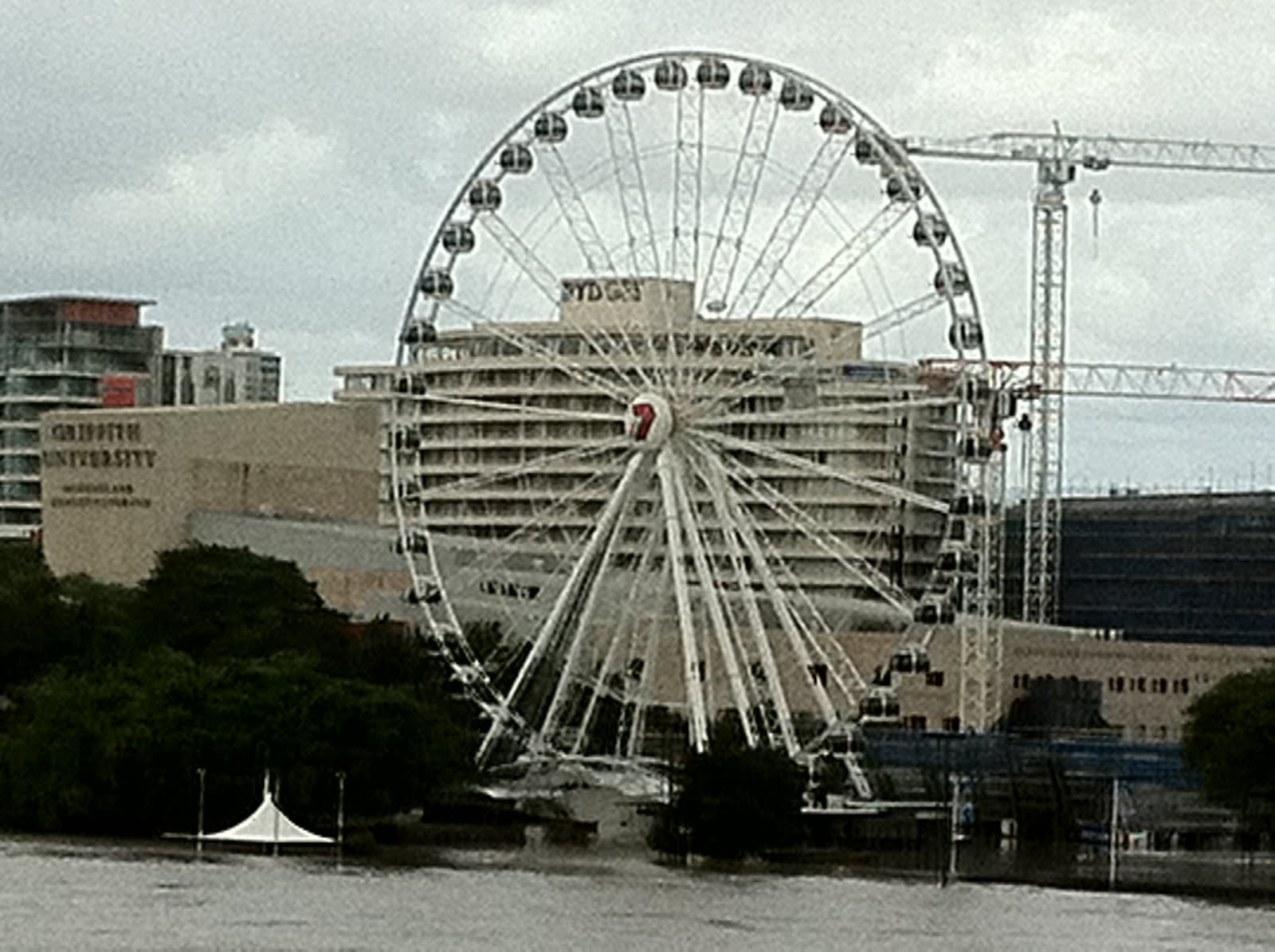
Brislantis and Suburbs, During Jan 2011 Flood Peak
Here's some photos a friend of mine sent me today from in and around Brisbane. Thanks Termy! :)


Regards,
The Outspoken Wookie







Regards,
The Outspoken Wookie
Subscribe to:
Posts (Atom)